Shoot Die Repeat
- 3.1
- Rating
- 100.00K
- Installs
- Free
- Price

 Analysis by App-foxy
I picked up Shoot Die Repeat expecting a quick action game built around a simple idea: failure is part of the progress. That basic loop is easy to understand, but it creates a very different experience from a traditional shooter. Instead of treating a lost run as wasted time, I found myself looking at each death as a chance to return with a little more strength and try a different approach.
That makes it particularly interesting on a shared phone or tablet. Someone in the household can play for a few minutes, put the device down, and let another person take over without needing a long explanation. The store summary, “Get stronger every time you die,” describes the central appeal better than a complicated feature list could. The short description, “Shoot Die Repeat,” also captures the rhythm: enter the action, make a mistake, learn from it, and go again.
Still, this is not a universally easy recommendation. The game has an average rating of 2.0 from around 245 ratings and 61 reviews, so there is clear evidence that many players have found reasons to be unhappy. I think that low reception matters, especially when deciding whether to install it on a device used by several people. My experience is that the concept has potential, but its appeal depends heavily on whether you enjoy repeated attempts and can tolerate some friction along the way.
You May Also Like

 Blood Strike: 2.5 Anniversary
Blood Strike’s Loadouts Turn Every Drop Into a Tactical Gamble
A close look at Blood Strike’s custom loadouts: how fast access to signature weapons reshapes its battle royale rhythm, rewards preparation, and narrows the gap between fights.

 Pandora - Music & Podcasts
Pandora’s Music Is Easy to Start, but Harder to Recover
Pandora’s strength is its low-effort path from a seed to a station. Its weak spot is how much confidence it asks you to place in connection, setup, and quiet recovery.

 8 Ball Pool
 Is Built on Rivalries, Rematches, and Routine
A close look at the rivalries, rematches, shared routines, and unanswered safety questions that turn a quick pool match into a persistent mobile community.

 Samsung Music
’s Quiet Strength Is Playing What You Already Own
Its reach comes less from spectacle than from dependable access to a personal library. That simplicity is both the app’s strongest retention engine and its ceiling.

 AccuWeather: Weather Radar
AccuWeather Review: A Quick, Clear Forecast for Everyday Decisions
For everyday plans, the best forecast is the one you can understand quickly. AccuWeather makes rain timing, radar, and local conditions easy to act on, with a few trade-offs.

 Hill Climb Racing
Why Hill Climb Racing Still Turns Crashes Into One More Run
A tiny car, a bumpy hill and one more upgrade: Hill Climb Racing keeps resurfacing because its simple chaos makes every near-miss feel personal.
More From Our News Desk
View All News


How the repeat-and-improve loop feels in everyday use
The most useful way to understand this action game is to imagine a short break during the day. I might have a few minutes while waiting for food, riding as a passenger, or taking a pause between chores. A conventional story-driven game can feel inconvenient in that situation because it asks me to remember a plot, protect a long run, or reach a checkpoint. Here, the expectation is different. I can start another attempt quickly, focus on immediate movement and shooting, and accept that the run may end without feeling that I have lost all value.
That structure also suits a household device. One person can play during a short window, then hand the phone to someone else. The next player does not need to understand a large world or a complicated inventory before having a meaningful turn. The key lesson is visible in the loop itself: surviving longer is useful, but dying can still move the overall experience forward because the character becomes stronger.
That design creates a trade-off I noticed quite quickly. Progress through failure can make difficult sections feel fairer, but it can also reduce the tension that comes from protecting a single precious attempt. In a conventional action game, a death may make me more careful because I want to preserve my progress. In this game, I am more willing to experiment. That is good when I want a forgiving challenge, but less satisfying if I am looking for a high-stakes run where every decision has lasting consequences.
Why the idea works better for short sessions
I would describe the game as a better fit for repeated short sessions than for a long evening of uninterrupted play. The shooting gives each attempt an immediate purpose, while the strengthening mechanic provides a reason to return after a setback. I do not need to wait for a large story reveal to feel that another try has value.
There is also a useful psychological difference between losing and progressing. When a run ends, I can ask what went wrong without automatically concluding that the time was wasted. That makes the game approachable for players who usually abandon action titles after a few failures. A younger member of a household may also find the idea easier to accept: losing is not presented only as punishment, but as part of becoming more capable.
However, I would not confuse this with a completely relaxed experience. The shooting still demands attention, and repeating a difficult section can become tiring if the improvement does not feel fast enough. The low average rating is a warning that the central concept alone does not guarantee satisfying execution. If you need consistently polished pacing or a highly refined action system, I would compare it carefully with better-established alternatives before committing your time.
Three practical habits that make the loop less frustrating
My first practical tip is to treat early attempts as information-gathering rather than as tests of skill. Instead of rushing to survive at all costs, I pay attention to where I usually lose control, which attacks force me into bad positions, and whether I am repeating the same mistake. Because death contributes to becoming stronger, an unsuccessful attempt can be useful when it exposes a pattern.
Second, I avoid handing the device to another player in the middle of a chaotic moment. On a shared phone, the cleanest handoff is after a run has ended, when the next person can begin with a clear understanding of what the game is asking. This is a small household habit, but it prevents the next player from inheriting confusion or assuming that a sudden defeat was caused by poor play.
Third, I decide in advance how long I want to play. Repeat-based action games can encourage “one more attempt” because every death suggests that the next run might be better. A short session limit keeps the loop enjoyable instead of turning a quick break into an irritating grind. This is especially useful when several people share one device and each person expects a fair turn.
Sharing one device without mixing up expectations
Household use changes the question from “Is the game fun?” to “Will this game work well when more than one person uses the same device?” My answer is cautiously positive for casual turn-taking, but I would not assume that every player has a separate progression path. The safest approach is to treat the device’s existing game state as shared unless you have personally checked how the installed version handles separate users.
That boundary matters more than it might seem. If one person becomes stronger through repeated deaths, another player may not want to inherit that progress. A beginner may prefer to experience the early challenge, while an experienced player may want to continue from a more advanced state. Without a clearly separated profile arrangement, the household should agree on whether the game belongs to one shared run or whether each person gets a scheduled turn with the same state.
I would set that expectation before children or siblings begin playing. It avoids a common argument: one person believes they are building their own character, while another person changes the progression during a later session. The game’s premise makes shared progress tempting, but shared progress is not the same as separate ownership. Keeping that distinction clear is one of the most important setup decisions for a family device.
What to check before a child starts playing
The listed content rating is Everyone 10+, which places the game in an age range suitable for older children and general audiences rather than very young users. I would still look at the actual play experience with the child in mind. Action games based on shooting can feel harmless to one player and uncomfortable to another, even when the age label is acceptable.
I also pay attention to the way a child reacts to repeated failure. The strengthening mechanic may help a player stay motivated, but it can also encourage repeated attempts long after the session stopped being fun. A short conversation about stopping points is more useful than assuming the game will regulate play by itself. The rating gives an age context; it does not replace a parent’s judgment about temperament, attention span, or comfort with the action.
In-app purchases are another household boundary worth discussing. Individual items range from $2.99 to $14.99, so I would not leave purchasing decisions vague on a shared device. Even when the game itself is free, a child may interpret an upgrade or item as a normal part of getting stronger. I recommend agreeing that any purchase requires permission, and I would make sure the adults sharing the device understand who is responsible for approving it.
This is not an argument against installing the game. Free access makes it easy to test, and the purchase range is visible enough to plan around. My point is that the free entry and the paid options should be treated as two separate decisions. A household can enjoy the basic repeat-and-improve loop without automatically allowing spending to become part of the routine.
Coordinating turns when everyone wants a quick game
The game is naturally suited to informal coordination because attempts have a clear beginning and end. In my experience, that makes it easier to say, “I will finish this run, then it is your turn,” rather than negotiating around an open-ended campaign chapter. For a shared tablet in a living room, that simple structure can be a real advantage.
There is a catch: a run may end at an inconvenient time, and one player may want to continue immediately because the next attempt feels promising. I find that agreeing on a fixed number of attempts works better than promising a vague amount of time. It gives each person a visible boundary and reduces the temptation to stretch a turn indefinitely.
Another useful arrangement is to separate learning sessions from competitive sessions. During a learning session, the player can experiment and accept frequent deaths without commentary from everyone else. During a competitive session, household members can compare who survives longer or who adapts more quickly. The game does not need a formal multiplayer feature for this kind of social use; the competition can simply happen around the same device. That said, players should understand that comparing attempts is different from comparing separate accounts or guaranteed equal starting conditions.
I would also avoid using one person’s advanced progress as a way to pressure another player. The appeal of this game is supposed to come from gradually understanding the loop, not from being handed a stronger state and then judged against it. For a child or first-time player, starting from a shared advanced position may make the action easier but the learning less meaningful.
Version, access, and the practical installation decision
Shoot Die Repeat is free to install, developed by Heseri Games, and currently listed at version 1.4.8. It supports devices running Android 7.1 or later, which makes it accessible to many older phones and tablets that cannot run newer software. That compatibility is useful for a household with a spare device, although actual comfort will still depend on the device’s screen, controls, and general performance.
The game has passed 50K+ installs, so it is not an unknown experiment with no audience at all. At the same time, that reach should not be mistaken for proof that the experience will suit everyone. The average rating of 2.0 is the more important signal when I am deciding whether to recommend it strongly. I would install it because the core idea interests me, not because the audience response suggests a safe choice for every player.
For a shared device, I would begin with a short trial and observe three things. First, can each player understand the shooting and movement without constant help? Second, does dying feel like progress, or does it feel like repeating the same obstacle? Third, can the household agree on how to handle the shared game state and purchases? If the answer to those questions is positive, the free price makes experimentation reasonable.
If the device is older, I would also test it before promising it as a regular family game. The minimum operating system tells me that the software can run on a relatively old Android version, but it does not tell me how comfortable the action will feel on every model. A small screen, slow response, or awkward hand position can matter more in a shooter than in a turn-based puzzle game.
When another action game would be a better choice
I would choose a different action game for someone who wants a clear story, carefully paced levels, or a strong sense that every run is unique. The repeat-and-strengthen structure here is intentionally narrow. It is built around the relationship between shooting, dying, and returning stronger, so players who dislike repetition may quickly feel that the game is asking them to do the same work again.
I would also look elsewhere for a household that needs clearly separated player identities. Since the practical question is how progression behaves on one device, I would not promise independent saves unless I had checked that arrangement directly. A game with obvious profiles or a more naturally turn-based design may be easier for siblings who want their own progress protected.
On the other hand, I would prefer this title over a lengthy campaign when the main goal is quick action with a forgiving attitude toward failure. It is also a reasonable choice for someone who enjoys testing small changes in approach. The death mechanic gives experimentation a purpose that a conventional shooter may not offer, especially for a player who tends to quit after losing a run.
My household verdict after living with the idea
My final view is mixed but clear. This is a free action game worth testing, not a blind recommendation. The central loop is easy to explain, works well in short sessions, and can fit casual turn-taking on a shared device. I like the fact that failure has a constructive role instead of simply erasing the value of a run.
For a household, I would install it only after setting three boundaries: decide whether progression is shared, agree on how turns end, and make purchases an adult decision. Those steps are more important here than they would be in a simple offline puzzle because becoming stronger is tied directly to repeated attempts, and a shared state can affect how each player experiences the challenge.
The age rating of Everyone 10+ gives families a useful starting point, but I would still watch how each child responds to shooting, frustration, and the urge to keep retrying. Older children and adults who enjoy learning through failure may find a satisfying loop. Very young players, highly competitive siblings, or anyone who needs private progression may be better served by another game.
Heseri Games has built a concept that is immediately understandable: shoot, lose, return, and use the setback to become stronger. Whether that concept becomes enjoyable depends on the quality of the moment-to-moment experience and on the player’s tolerance for repetition. With its low average rating, I would keep expectations modest and use the free installation as a trial rather than treating it as a guaranteed hit.
In short, I see it as a niche pick for short action sessions and informal household sharing. If you like the idea of turning defeat into progress and you are willing to manage the shared-device boundaries yourself, it may earn a place in your rotation. If you want polished long-term progression, separate family accounts, or a game that avoids repeated attempts, I would skip it and choose a more established alternative.
FAQs for Shoot Die Repeat
01What is Shoot Die Repeat, and how does the gameplay work?
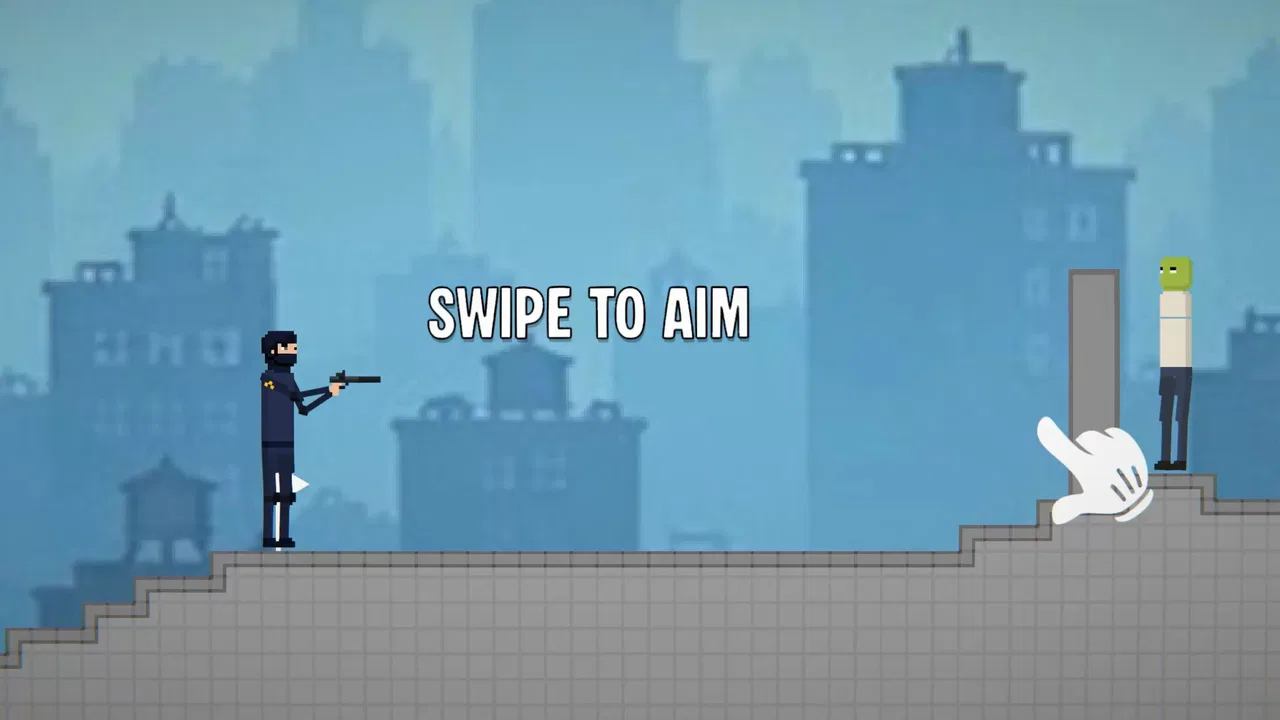
Shoot Die Repeat is an action game built around fast combat, repeated attempts, and learning from failure. You control a character through dangerous stages, fight enemies, avoid hazards, and try to improve your performance with every run. The title suggests a trial-and-error structure, so players should expect quick deaths, restart-based progression, and a strong focus on timing, movement, and accurate shooting.
02Is Shoot Die Repeat free to download and play?
The game may be available as a free download, but players should check the current Google Play Store or App Store listing for the exact pricing model in their region. Some versions of games like this can include advertisements, optional purchases, or paid upgrades. Before downloading, review the store page for information about in-app purchases, supported devices, age ratings, and whether an internet connection is required.
03Does Shoot Die Repeat require an internet connection?
The online requirements can depend on the version and platform. Core gameplay may be designed for short, repeatable sessions and could work offline, but advertisements, cloud saving, leaderboards, updates, or account-related features may require an active connection. If offline access is important to you, check the latest store description and test the game after installation with Wi-Fi and mobile data disabled.
04Is Shoot Die Repeat suitable for children and casual players?
Shoot Die Repeat is likely to appeal to players who enjoy shooting, arcade action, and challenging repeat attempts. Because the game includes combat and may feature stylized violence, parents should review its official age rating before allowing younger children to play. Casual players can enjoy short sessions, but the difficulty and repeated failures may feel frustrating for anyone looking for a relaxed or purely story-driven experience.
05What should I check before downloading Shoot Die Repeat on Android or iOS?
Before installing Shoot Die Repeat, confirm that your phone or tablet meets the required operating-system version and has enough free storage for the download and future updates. It is also worth checking the latest user reviews, permissions, privacy information, controller support, and whether progress is synchronized between devices. Downloading only from the official Google Play Store or Apple App Store is recommended for safety.
Pros
- Fast-paced runs make each attempt feel exciting and replayable.
- Simple controls are easy to learn while movement still feels rewarding.
- Short levels suit quick gaming sessions on mobile.
- Retrying after failure is quick
- keeping the action flowing.
- Distinct enemy patterns encourage experimentation and skill improvement.
Cons
- Difficulty can rise sharply
- which may frustrate casual players.
- Repeated attempts may feel somewhat repetitive over time.
- Precision timing is required
- especially in later stages.
- Some levels offer limited room for alternative strategies.
- Progress can feel slow if you struggle with a particular challenge.

Shoot Die Repeat
Gallery